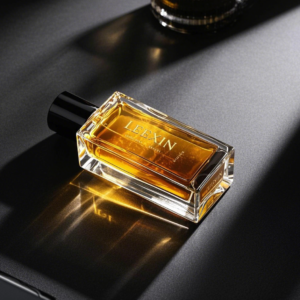
In the overall packaging system of perfume, although plastic caps seem small, they are an indispensable and important component. They not only serve the practical function of protecting the perfume bottle mouth and preventing perfume volatilization, but also echo the perfume bottle body and packaging box at the visual level, jointly conveying the brand tone and design concept of the perfume. A well – designed and high – quality plastic cap can instantly enhance the overall grade of the perfume and become an important visual touchpoint for consumers when purchasing.
Currently, the mainstream materials used for perfume plastic caps include ABS plastic, PP plastic, PET plastic, etc. These materials can meet the dual needs of perfume packaging for aesthetics and practicality by virtue of their good plasticity, corrosion resistance and surface smoothness.
Customization Process of Perfume Plastic Caps
The customization of perfume plastic caps is a precise and rigorous process, which requires close cooperation from multiple links from design to production to ensure that the final product is highly consistent with the brand’s needs. The specific process is as follows:
Demand Communication and Design Confirmation
The first step in the customization process is full – fledged demand communication between the brand and the Leexin manufacturer. The brand needs to clarify the core requirements of the plastic cap, including the size of the cap (which needs to be accurately matched with the perfume bottle mouth, and the error is usually controlled between 0.1 – 0.3mm), shape (such as circular, square, special – shaped, etc., which needs to be combined with the overall design style of the perfume bottle body), color (which can choose solid color, gradient color or special color with metallic luster according to the brand VI system), surface treatment process (such as frosted, bright surface, silk screen printing, gold stamping, laser engraving, etc., used to present the brand logo, patterns or special texture) and functional requirements (such as whether anti – theft buckles and sealing rubber rings are needed).
After the demand is clarified, the Leexin design team will carry out 3D model design according to these requirements. Professional design software (such as SolidWorks, AutoCAD) is used to build a three – dimensional model of the cap, which clearly shows the structural details, size parameters and surface process effects of the cap. After the design is completed, renderings and engineering drawings will be generated for the brand to confirm. The two parties will conduct multiple communications and adjustments until the design plan fully meets the brand’s expectations, and finally sign the design confirmation document to lay the foundation for the subsequent production links.
Mold Design and Manufacturing
The mold is the core tool for the production of plastic caps, and the quality of its design and manufacturing directly determines the precision and quality of the caps. In the mold design stage, LX engineers will design key structures such as mold cavity, gate, cooling system and ejection system according to the confirmed 3D model of the cap and combined with the characteristics of plastic materials (such as shrinkage rate). For example, in order to ensure that there are no defects on the surface of the cap, the gate position should be reasonably designed to avoid weld lines; in order to improve production efficiency, the cooling system should be optimized to ensure that the plastic is cooled quickly and evenly.
High – precision processing equipment, such as CNC machining centers and EDM (Electrical Discharge Machining) machines, is used for mold manufacturing to perform precision processing on mold steel (commonly used materials are P20, 718H, etc.), and the processing precision can reach the level of 0.005mm. After the mold is manufactured, the mold trial and mold repair links are also required: install the mold on the injection molding machine, inject plastic raw materials for trial production, check whether the trial – produced caps have dimensional deviations, surface defects, structural problems, etc. If problems are found, carry out targeted mold repair on the mold until the trial – produced caps fully meet the quality standards, and then the mold can be officially put into use.
Injection Molding Production and Quality Inspection
Injection molding production is the key link to convert plastic raw materials into plastic caps. First of all, according to the material requirements of the cap, select the corresponding plastic particles (such as ABS particles), put them into the hopper of the injection molding machine, and heat the plastic particles into a molten state through the heating of the barrel (the melting temperature of different materials is different, for example, the melting temperature of ABS is about 200 – 250℃). Then, the screw of the injection molding machine injects the molten plastic into the mold cavity at high pressure and high speed. After the plastic is cooled and shaped in the cavity, the ejection system of the mold ejects the cap, completing one injection molding cycle.
During the injection molding production process, the caps need to undergo full – process quality inspection. The inspection contents include: dimensional inspection, using tools such as calipers, micrometers and projectors to check whether the key dimensions of the cap (such as diameter, height and wall thickness) meet the design standards; surface quality inspection, using naked eye observation and magnifying glass inspection to ensure that there are no scratches, bubbles, material shortages, flash and other defects on the surface of the cap; functional inspection, such as testing the sealing performance of the cap (through air tightness test to ensure that the perfume does not leak) and the smoothness of opening and closing (checking whether the fit between the cap and the bottle mouth is appropriate in tightness). For unqualified products, the causes (such as mold problems, improper injection parameters, etc.) are promptly identified and adjusted to ensure that each batch of caps meets the quality requirements.
Surface Treatment and Finished Product Assembly
According to the customization requirements, the caps completed by injection molding also need to undergo surface treatment processes to improve their aesthetics and brand recognition. Common surface treatment processes include: silk screen printing, which prints the brand logo, patterns, etc. on the surface of the cap through screen printing. The ink should be a special ink that is alcohol – resistant and wear – resistant to ensure that it does not fall off during long – term use; gold stamping/silver stamping, which uses a heated gold stamping plate to transfer metal foil (such as gold foil, silver foil) to the surface of the cap to form patterns or text with metallic texture, enhancing the high – end sense of the cap; laser engraving, which uses laser to engrave fine patterns or logos on the surface of the cap, and the engraving effect is long – lasting and not easy to wear; frosted treatment, which makes the surface of the cap present a fine frosted texture through sandblasting or mold surface treatment, enhancing the hand feel and anti – slip performance.
After the surface treatment is completed, if the cap is designed with a special structure (such as a built – in sealing rubber ring, anti – theft buckle), the finished product assembly is required, that is, embedding the sealing rubber ring into the cap or installing the anti – theft buckle structure. Finally, a final appearance and functional sampling inspection is carried out on the finished caps. After confirming that there are no problems, the caps are packaged according to the brand’s requirements (such as individual bagging, batch packing) and prepared for delivery.
The Impact of Different Quality Molds on Production Speed and Quality
Mold quality is a core factor affecting the production efficiency and product quality of perfume plastic caps. There are significant differences between high – quality molds and low – quality molds in the production process, and the specific impacts are as follows:
Impact on Production Speed
With optimized structural design and precise manufacturing process, high – quality molds can greatly improve the production speed. On the one hand, the cooling system of high – quality molds is reasonably designed, and the layout of cooling channels is uniform and smooth, which can quickly take away the heat of the molten plastic and shorten the cooling and shaping time of the plastic in the cavity. Taking the common circular perfume cap as an example, the cooling time of high – quality molds can be controlled within 10 – 15 seconds, while the cooling time of low – quality molds may be extended to 20 – 30 seconds due to the unreasonable design of the cooling system (such as blocked cooling channels, sparse layout), resulting in an increase in the time of a single injection molding cycle and a decrease in production efficiency.
On the other hand, high – quality molds have strong stability and are not prone to failures in the long – term production process. The cavity, ejection system and other structures of the mold have undergone precision processing, with low wear, and can continuously and stably complete the injection molding cycle, reducing the downtime caused by mold failures. However, due to poor material quality (such as the use of inferior mold steel) and low processing precision, low – quality molds are prone to problems such as cavity wear, ejection system jamming, and gate blockage during production, requiring frequent downtime for mold repair, which seriously affects the production progress. According to statistics, under the same injection molding equipment and production conditions, the production efficiency of using high – quality molds is 30% – 50% higher than that of using low – quality molds.
Impact on Product Quality
High – quality molds can ensure the high precision and high quality of plastic caps, which is specifically reflected in the following aspects: in terms of dimensional precision, the cavity of high – quality molds has high processing precision, and the shrinkage rate of plastic is taken into account, so the dimensional deviation of the produced caps is extremely small, and the dimensional consistency of caps in different batches is good, which can be accurately matched with the perfume bottle mouth, avoiding the problem of loose caps or inability to close tightly; in terms of surface quality, the cavity surface of high – quality molds has undergone fine polishing treatment, with high smoothness (up to mirror effect), so the surface of the produced caps is flat and smooth, without scratches, bubbles, weld lines and other defects, and can perfectly present the designed surface process effects (such as clear and complete silk screen printing and gold stamping patterns).
Low – quality molds, however, are difficult to ensure product quality. Due to the low processing precision of the mold cavity, the produced caps have large dimensional deviations, which may lead to problems such as too large or too small diameter and uneven wall thickness, resulting in the inability of the caps to match the bottle mouth and affecting the use; the rough surface of the mold cavity will cause defects such as pockmarks and scratches on the surface of the caps, which are difficult to cover even after surface treatment, reducing the aesthetics of the products; in addition, the material strength of low – quality molds is insufficient, and problems such as cavity deformation and wear are prone to occur in long – term production, leading to changes in the shape of the produced caps, large quality differences between batches, and an increase in the proportion of unqualified products. For example, a brand once used low – quality molds, which led to the problem of uneven wall thickness of a batch of perfume caps, with the unqualified rate as high as 15%. This not only caused a waste of raw materials, but also delayed the launch time of the product, bringing economic losses and reputation impacts to the brand.
To sum up, the customization of perfume plastic caps is a systematic project integrating design, mold manufacturing and injection molding production, and mold quality is a key factor throughout the entire production process. For perfume brands, choosing a professional manufacturer, attaching importance to the mold design and manufacturing links, and investing in the creation of high – quality molds can not only improve the production speed of plastic caps and ensure the stability of product quality, but also enhance the overall packaging grade of the perfume through high – quality caps and strengthen the brand competitiveness.